
"time zones"
3000 article(s) found

How is the coffee quality in Ethiopia's Koke washing station? introduction to the flavor of Koke coffee beans
Professional coffee knowledge exchange more coffee bean information please follow the coffee workshop (Wechat official account cafe_style) KOKE MILL-YIRGACHEFFE WOREDA, the Koke washing station owned by the GEDEO ZONE family was built in 2011, has improved a lot since 2015, and the staff of the washing station began to provide growers with ways to improve the quality of coffee. The Koke washing station is located at

What is the difference in flavor and taste between Guji and Sidamo in Ethiopian coffee producing area
There are eight major coffee producing areas in Ethiopia: Lekempti, Limu, Illubabor, Djimmah, Harar, Teppi/Bebeka, Sidamo and Yirgacheffe. Evaluation of Ethiopian Coffee in China
Description of Coffee Flavor in Ethiopia Sunshine Sidamo G1 Valley Shakisuogesha processing Plant
For professional baristas, please follow the coffee workshop (Wechat official account cafe_style) Ethiopia Solar Sidamo G1 Valley Shakiso Giza processing Plant Lot7 (Ethiopia Sidamo Guji Shakiso Danbi Uddo Gigessa Natural G1 Lot7) Flavor description: grapes, orange berries, chocolate bread, sweet and sour juicy taste like maple syrup

Coffee Extraction Formula and Gold Cup Extraction Theory| Discussion on the relationship between extraction rate and water-powder ratio
Professional barista communication, please pay attention to coffee workshop (Weixin Official Accounts cafe_style) We start from SCAE's gold cup extraction theory, according to SCAE (European Coffee Boutique Association) definition Gold Cup Standard (published in 1960) 1000ml water, 5065g coffee powder, 92C 96C hot water brewed coffee basically SCAE set a strike zone, that is, medium

Yejia Coffee Farmers Union YCFCU Hofsa Cooperative Hafursa Coop washed native varieties
Professional coffee knowledge exchange more coffee bean information please follow the coffee workshop (Wechat official account cafe_style) Yega Chet Coffee Farmers Union YCFCU Hoffee Cooperative Hafursa Coop washing native varieties mixed flavor? Hofsha, originally a village name in the town of Ethiopia, is the smallest unit of the four local administrative levels, namely Region /

The natural environment in which coffee trees grow. Planting conditions of coffee trees.
In botany, coffee trees belong to the evergreen trees of the subgenus Rubiaceae, and coffee beans, commonly known as coffee beans, are actually the seeds of the fruit of coffee trees, just because they are shaped like beans, so they are called coffee beans. Climate is the decisive factor for coffee cultivation. Coffee trees are only suitable for growing in the tropics or subtropics, so the zone between latitude 25 degrees south and north is the most suitable for growing coffee. And this...

The planting environment of coffee trees introduces which countries are the most suitable for growing coffee
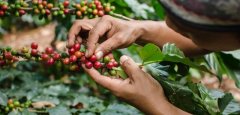
The first flowering period of the coffee tree is about three years old. the white five-petal tube-shaped flowers are filled with a faint scent of jasmine and the inflorescences are arranged in dense clusters. Flowers wither after two or three days of blooming and begin to bear fruit after a few months. The fruit is a drupe with a diameter of about 1.5 cm, which is green at first, then turns yellow gradually, and turns red after ripening, which is very similar to cherries.

Lincang, Yunnan won the title of demonstration area of fine coffee beans in China.
At the Lincang branch of the 16th annual meeting of the China Association for Science and Technology held here, the China Fruit Circulation Association awarded the plaque of "China Lincang Fine Coffee Bean demonstration Zone" to the Lincang Municipal Government. Accordingly, Lincang City will build a high-quality coffee bean demonstration zone with high standards, a high starting point and a scientific standard, and build a high-quality coffee brand in all directions.

Red cherry plans to sunburn the pineapple Yejiaxuefei how to flush the Japanese ice hand to Yega?
Professional coffee knowledge exchange more coffee bean information please follow the coffee workshop (Wechat official account cafe_style) this is the latest single coffee on the new, let me the most pleasant surprise one, Gedeo Zone2018 red cherry project, due to the previous Rain Water too much, the new production season of Yega Xuefei coffee maturity delayed about 3 weeks, these 3 weeks to a certain extent increased the sweetness of coffee fruit, so

How to effectively improve the market competitiveness of coffee franchisees, and what should be done?
The characteristic is the so-called competitiveness of the winning point, that is, to be able to stand out in the fierce competition. If you want to do this, the products in the storefront must have enough characteristics. After all, people all have a curious heart. To meet the needs of this aspect, it will be easy to meet the needs of current consumers, and it will also be conducive to the long-term development of coffee franchises. MY Z

Where is the best place to grow coffee trees? where is the best place to grow coffee?
In botany, coffee trees belong to the evergreen trees of the subgenus Rubiaceae, and coffee beans, commonly known as coffee beans, are actually the seeds of the fruit of coffee trees, just because they are shaped like beans, so they are called coffee beans. Climate is the decisive factor for coffee cultivation. Coffee trees are only suitable for growing in the tropics or subtropics, so the zone between latitude 25 degrees south and north is the most suitable for growing coffee. And this...

China's coffee has entered the era of boutique, coffee joining will set off "the third wave"
Boutique coffee shops are becoming more and more popular on the west coast of the United States. After the advent of instant coffee and the debut of coffee franchise stores, this high-quality coffee shop, which is particular about the purchase and brewing of coffee beans, is called the third wave in coffee history. While the influence of boutique coffee franchisees is gradually expanding, China, as the largest coffee seller in the world, is destined to set off boutique coffee to join.

Yega Xuefei Guji producing area detailed introduction to the classification of Ethiopian coffee producing area
Yega Xuefei Fruit Ding Village washed G1 Alim Bukato small Farmers Variety: Ethiopia ancient excellent original species baking degree: shallow baking method: washing flavor: as soon as it is ground like coffee blossoms and egg blossoms and lemon aromas come to the nostrils, the sweet apricot leads the opening, the sour aromas of white pomelo and lemon flutter in the mouth, and the sweet and sour feeling of yogurt adds layers.
Introduction to the Flavor of washed Coffee beans from Alim Bukato, Guoding Village, Yejia Feifei
Yega Xuefei Fruit Ding Village washed G1 Alim Bukato small Farmers Variety: Ethiopia ancient excellent original species baking degree: shallow baking method: washing flavor: as soon as it is ground like coffee blossoms and egg blossoms and lemon aromas come to the nostrils, the sweet apricot leads the opening, the sour aromas of white pomelo and lemon flutter in the mouth, and the sweet and sour feeling of yogurt adds layers.

What are the flavor characteristics of Essex Flower Kui Coffee? a brief introduction to the characteristics of Sidamo Huakui coffee beans
Professional coffee knowledge exchange more coffee bean information please follow the coffee workshop (Wechat official account cafe_style) Qianjie Coffee-Sidamo flower Kuifa pot brewing sharing Ethiopian coffee is highly rated in China, especially the Chinese people are particularly interested in and love the Sidamo and Yirgacheffe producing areas of Ethiopia. Sidama province

Introduction to the flavor of Sidamo Red Cherry Project Coffee in the Sidamo G1 Valley
Professional coffee knowledge exchange more coffee bean information please follow the coffee workshop (Wechat official account cafe_style) Ethiopia Solar Sidamo G1 Valley Jiaji Sojigsa processing Plant Coffee Flavor description Product name: red Cherry Plan Ethiopian Solar Sidamo G1 Valley Jiaji Sakeso Dunbiu Village Murixu processing Plant (Ethiopia Sidamo Guji Shakiso)

The process of picking from Coffee Tree to Coffee Fruit and beans
Coffee Tree introduction in fact, the Arabs began to grow coffee in 525 BC, and chewing fried coffee beans became popular in the Arab region. In 890 AD, Arab merchants sold coffee beans to Yemen, and Yemenis made coffee beans into drinks for the first time. In the 15th century, coffee was introduced into Europe, Asia and soon into America. By the 18th century, the global tropics and subfever

Coffee trees, raw coffee beans and ripe beans tell you what coffee is.
Now coffee has come into our lives, and all kinds of coffee shops are all over the streets. While we enjoy delicious coffee, do you know the origin of coffee? The planting conditions of coffee trees the origin of coffee trees is in Ethiopia, Africa. In botany, the coffee tree belongs to the evergreen tree of the coffee subgenus of Rubiaceae, and the so-called coffee bean is coffee.

What's the difference between candle candle and Sakuran flavor? The difference between Guji and Sidamo producing areas
There are eight major coffee producing areas in Ethiopia: Lekempti, Limu, Illubabor, Djimmah, Harar, Teppi/Bebeka, Sidamo and Yirgacheffe. Ethiopian coffee is highly rated in China, especially the Chinese people are particularly interested in and love the producing areas of Sidamo and Yirgacheffe in Ethiopia. Sidamo

Luckin Coffee opened a second baking factory! And said that it will develop globally!
Luckin Coffee's successful self-rescue and rapid development in recent years are also obvious to all. I have to say, Lucky's marketing team is very discerning, not only to grasp the public consumer demand for innovative taste, launched a raw coconut latte, with the fire of the entire beverage circle, but also let Lucky brand deeply imprinted in the hearts of consumers